
Approaching Chinese painting
To dive into the world of Chinese brush painting and calligraphy is to enter an ancient tradition that remains fresh and vital today, both in and beyond China. It is a tradition with its own criteria and conventions, some of which may be unfamiliar to viewers steeped in Western artistic traditions. For these viewers, here are a few pointers.
Follow the brush
Traditional Chinese painting is all about brushwork. Historically, most Chinese painting has followed one of two styles of brushwork, known respectively as xieyi (写意) and gongbi (工笔). Xieyi literally means ‘writing an idea’ or ‘writing the meaning’. Paintings in this style are known for their bold brushwork that aims to capture – often with very few strokes – the inner energy or spirit rather than the external appearance of the subject. Gongbi literally means ‘fine (as in ‘finely crafted’) brush’. Paintings in the gongbi tradition display a more restrained, detailed brushwork, with fine outlines and delicate colouring. Both styles are found in contemporary works – sometimes in combination in the same painting. The paintings below illustrate the differences.
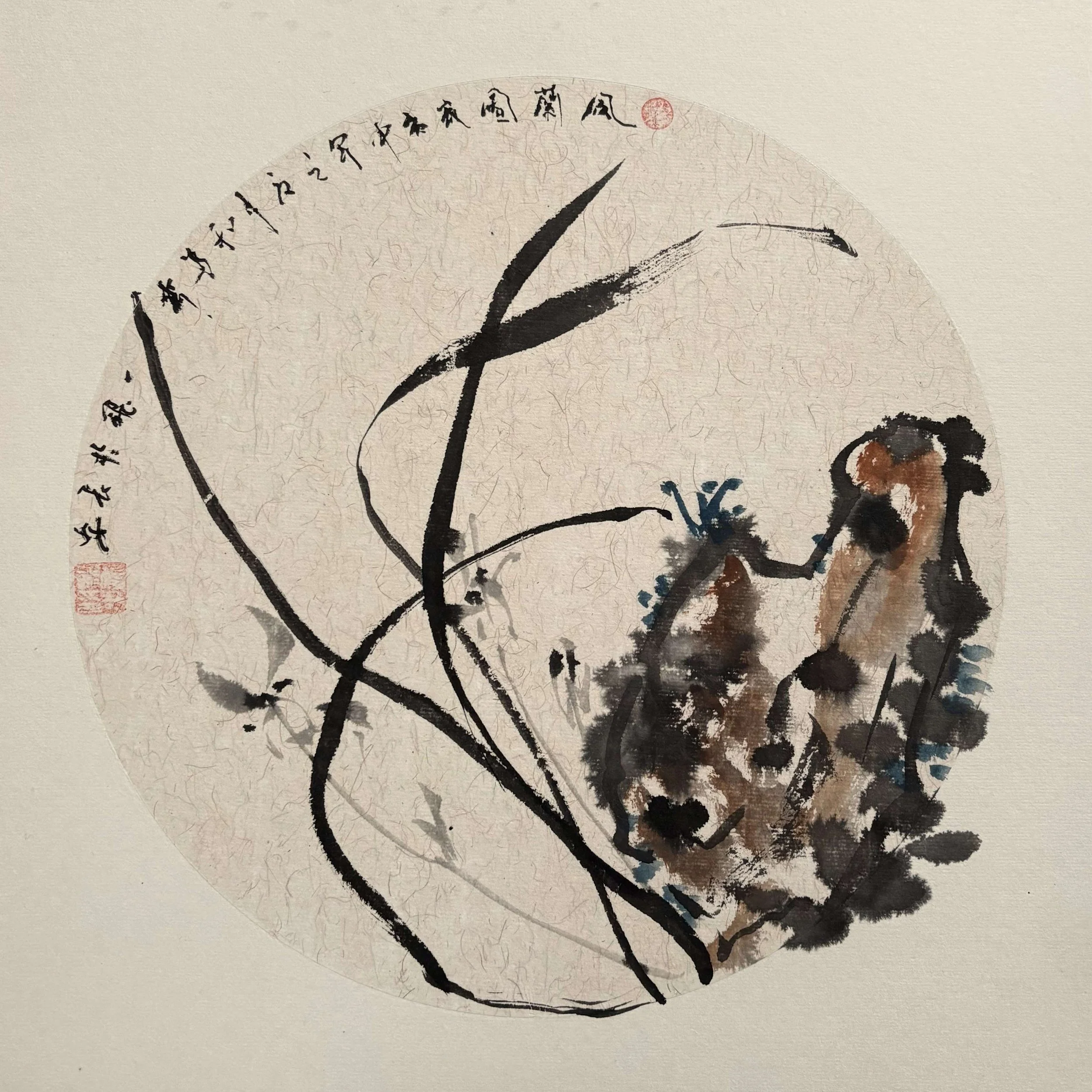
Xieyi style: orchids in the wind, Yang Yifei.
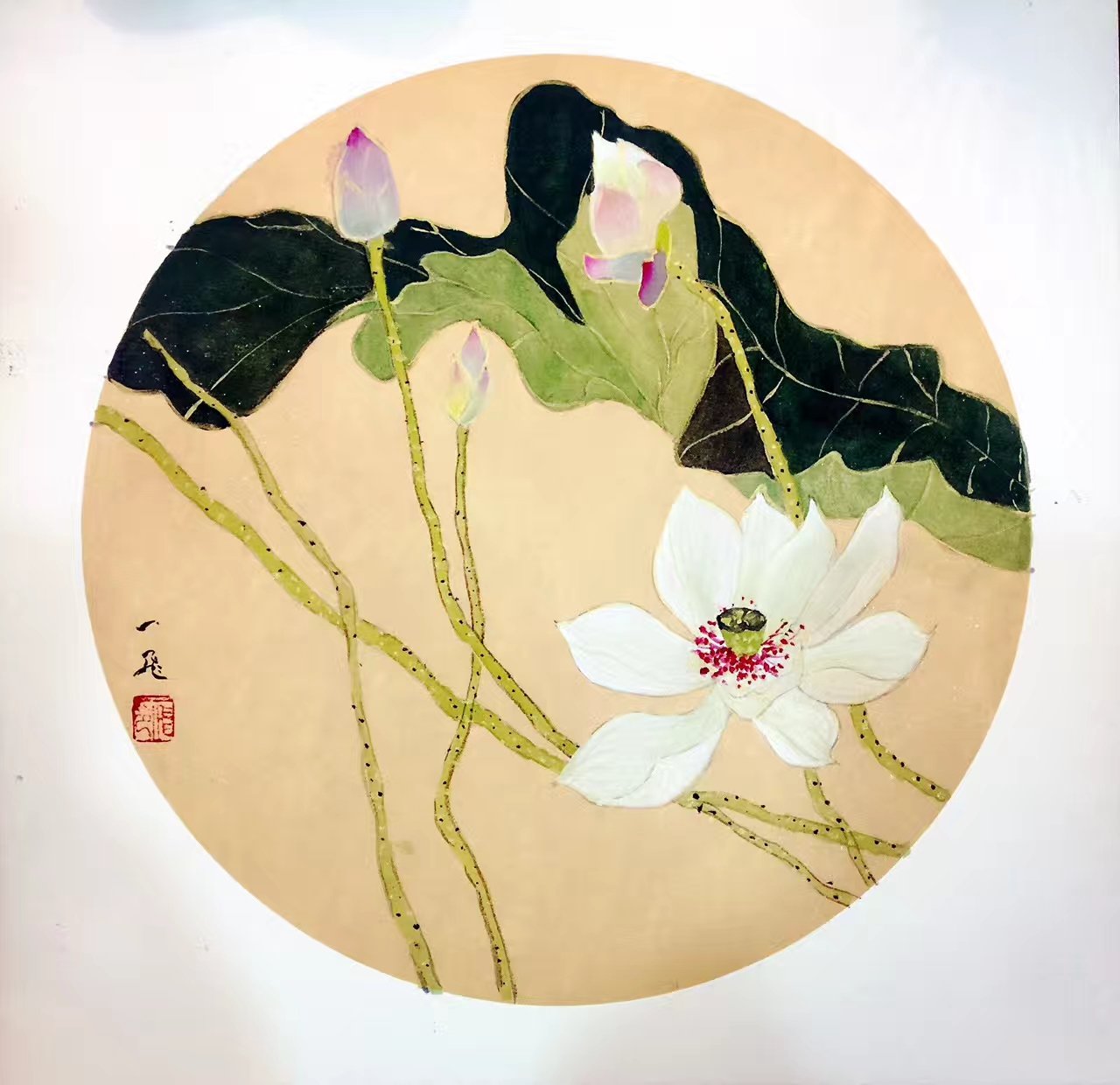
Gongbi style: lotus flowers, Yang Yifei.
A world of nature
Chinese paintings typically celebrate the natural world, whether close-up, as in so-called ‘flower and bird’ (hua niao 花鸟) paintings or from a distance in landscape paintings. Though people and dwellings are usually present in the latter, they are usually depicted as small in comparison with the grandeur of the natural landscape.
Appreciating Chinese paintings: four guidelines
Finally, Chinese painting has distinctive and enduring criteria for appreciation. More than 1,000 years ago, the Tang Dynasty scholar and calligrapher Zhang Yanyuan (张彦远) identified four attributes that determined the quality of a painting. The first was ‘formal likeness’ of the subject – that is, depiction not of the external appearance of the subject, but rather of its special qualities, such as the strength and agility of a horse or the resilience of bamboo in the wind. The second was the inner spirit or energy (qiyun 气韵) of the painting. Without this energy, even the most skilfully painted formal likeness will not resonate as great art. The third criterion was the artistic conception underlying the work, and the fourth, the quality of brushwork (Bush and Hsio-yen Shih 2012, p.54).
Old as they are, these four criteria serve as a valid guide to this day for judging the quality of a work. Of course, in deciding whether or not you like a painting, you should be guided by whatever criteria and feelings you choose, but the four attributes identified by Zhang Yanyuan all those years ago still provide a useful starting point.
Reference
Bush, S. and Hsio-yen Shih (2012). Early Chinese Texts on Painting, 2nd Edition. Hong Kong, Hong Kong University Press.